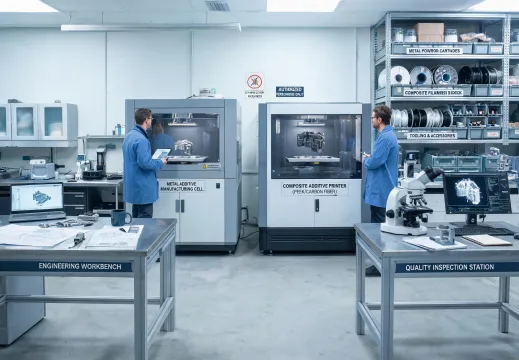
Printer cell evaluation
Build envelope, material handling, operator workflow, and queue volume are evaluated before a system recommendation is made.
Markforgedus.com is positioned for buyers who evaluate industrial 3D printing as a production capability. The site frames Markforged around tooling, equipment, and machinery programs where speed matters, but uncontrolled shortcuts create quality, purchasing, and operator risk.
Our mission is to make additive manufacturing practical for factories that need faster tooling, cleaner spare-part paths, and evidence strong enough for quality review.
That mission sounds simple, but it changes how a supplier conversation works. Instead of asking whether a buyer wants a printer, we start with the manufacturing problem: which fixture slows the line, which replacement part is trapped in a long lead-time queue, which pilot build needs production-like tooling, and which document set must exist before an engineer can sign off.
Markforged programs are written for operations leaders, manufacturing engineers, and sourcing teams who must balance cycle time with risk. The team treats additive manufacturing as an engineering system that includes material selection, machine capability, operator training, inspection evidence, revision control, and total cost of ownership. That view helps prevent a fast prototype from becoming a difficult production exception later.
Build envelope, material handling, operator workflow, and queue volume are evaluated before a system recommendation is made.
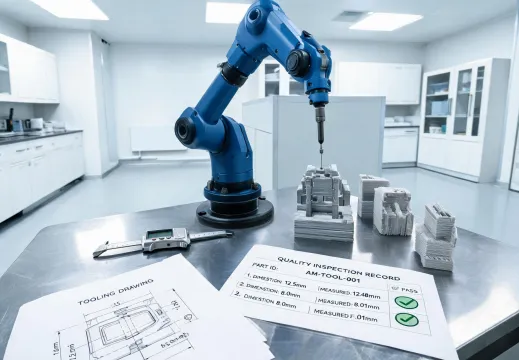
Quality evidence can include dimensional checks, photos, material route notes, and release comments for internal approval.
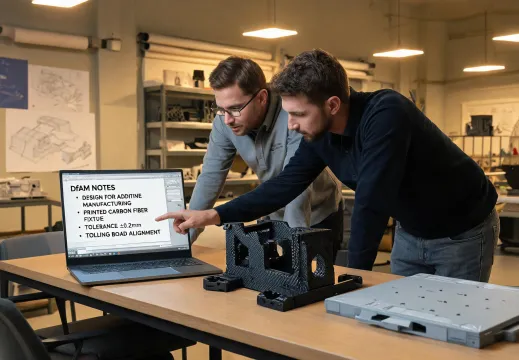
Engineers review geometry, critical faces, load cases, and revision status so the printed outcome serves the manufacturing requirement.
Captures part function, material exposure, tolerance notes, required quantity, and the approval path before print scheduling begins.
Request checklistDefines what a buyer may need for internal quality approval: revision, material, build settings summary, inspection notes, and operator guidance.
Discuss release packetReviews floor space, material storage, training, spare consumables, preventive maintenance, and queue governance for in-house deployment.
Plan a cellShare the production bottleneck, target part family, and current approval path. We will help determine whether additive manufacturing is a practical route or whether another process is more responsible.
Contact Engineering