Define the use case
We capture function, environment, load, operator handling, takt-time impact, and any regulated documentation requirement. This step prevents a print from being optimized for appearance while missing the production need.
Our service model is built for industrial teams that need more than a printer quote. We review geometry, machine envelope, reinforcement strategy, material exposure, tolerance expectations, inspection method, operator workflow, and purchasing risk before a tooling or equipment program moves into production.
Book Engineering Review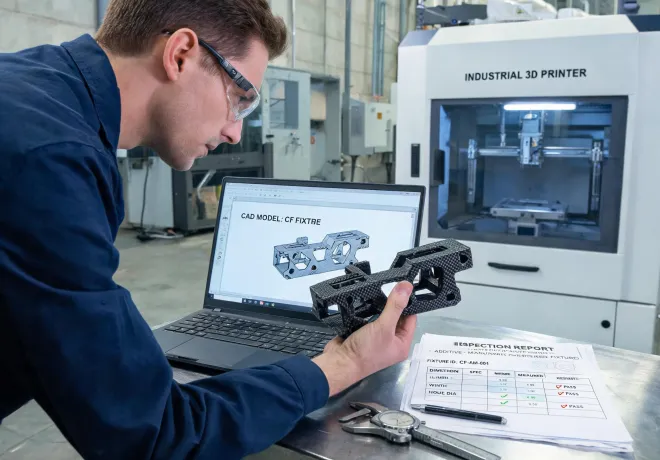
Every project is treated as a manufacturing change, not a demo print. That mindset keeps the conversation practical for engineering, purchasing, and quality teams.
We capture function, environment, load, operator handling, takt-time impact, and any regulated documentation requirement. This step prevents a print from being optimized for appearance while missing the production need.
Engineers evaluate wall sections, fiber path, support strategy, critical datums, GD&T notes, surface expectations, and the inspection route. Risk is flagged before build scheduling.
Parts are produced with documented material assumptions and reviewed against the agreed release criteria. Where appropriate, inspection notes, photos, and dimensional checkpoints are packaged for the buyer.
Successful tooling can move into repeat builds, printer-cell recommendations, spare-part stocking, or bridge-production planning with revision control and procurement visibility.
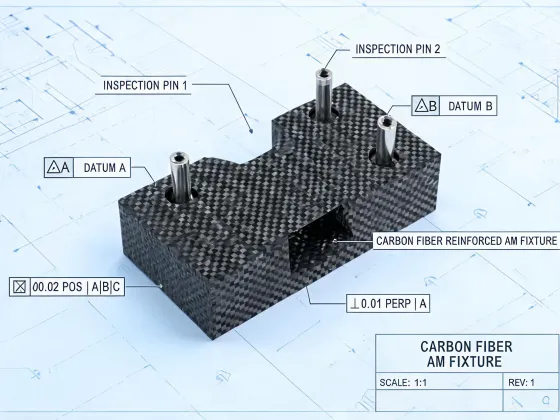
Markforged programs can include material route notes, build orientation, inspection checkpoints, operator instructions, and revision references. That evidence makes internal approval smoother when a printed fixture enters a controlled production cell.
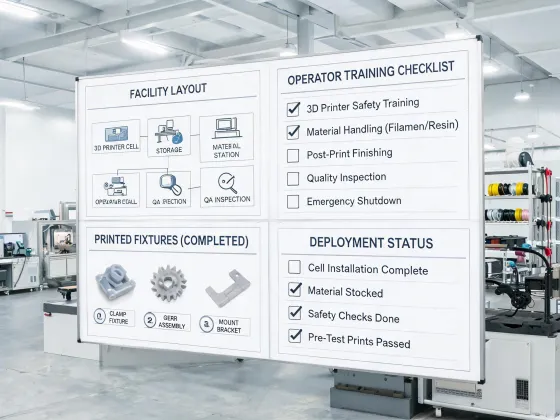
Printer recommendations account for envelope, queue volume, ventilation, operator availability, material storage, spare-part needs, and training expectations. The service goal is a deployable cell, not a disconnected piece of equipment.
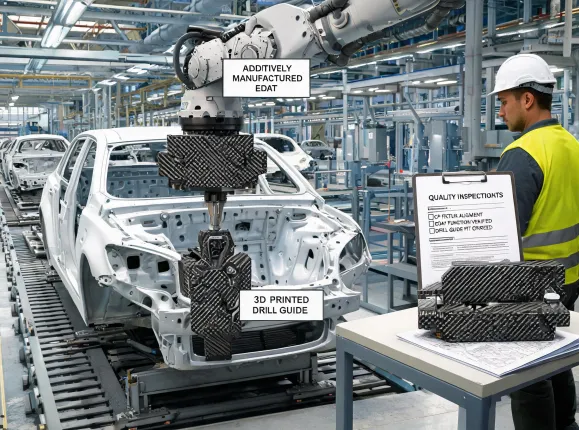
A manufacturing team needs fixture sets before the hard-tooled version is ready. Markforged reviews the fixture load case, routes the geometry to a reinforced composite build, defines inspection checkpoints, and supports bridge quantities while the permanent tooling plan matures. The buyer gets speed, but the quality team still gets a controlled release story.
For buyers that require controlled revision history, supplier records, and repeatable inspection checkpoints.
For aerospace teams that need traceability, configuration discipline, and formal first-article thinking.
For procurement teams that need build assumptions, resin or filament route notes, and release evidence.
Sometimes. The decision depends on load, temperature, wear, operator handling, dimensional needs, and expected lifetime. We compare a printed route against the existing fixture goal instead of assuming additive is always the right answer.
A STEP or IGES model, drawing if available, material requirement, functional surface notes, required quantity, operating environment, and target launch date help us return useful guidance quickly.
Yes, when the part family and validation plan fit additive manufacturing. Bridge programs include scheduling, documented build assumptions, and inspection checkpoints so short-run demand does not become uncontrolled production.