-
Is Sandvik Coromant actually worth the price premium?
-
How do I make sure I'm buying authentic Sandvik Coromant products?
-
What's the deal with tungsten carbide additive manufacturing — does it change how I buy tools?
-
What rookie mistake should I avoid at all costs?
-
How do I actually calculate whether a cheaper tool is costing me more?
-
What about buying Sandvik Coromant products direct vs. through a distributor?
-
What's the single most valuable change to your purchasing process?
I've been handling cutting tool orders for a precision machining shop since 2017. In that time, I've made three expensive mistakes with Sandvik Coromant products — roughly $4,200 in wasted budget, a week of production delay, and one very awkward meeting with my production manager. Now I keep a checklist. Here's what I wish someone had told me on day one.
Is Sandvik Coromant actually worth the price premium?
Short answer: in our shop, yes — but not for the reason most people assume.
In my first year (2017), I made the classic "lowest quote wins" error. We had a batch of 316 stainless turning jobs, and the Sandvik Coromant quote came in about 18% higher than a local competitor's offer on nominally comparable inserts. I approved the cheaper option to look good on the monthly cost report. Three weeks later, we'd burned through 2.3x as many inserts, scrapped $1,900 in parts, and I was explaining to my production manager why "saving" $400 cost us nearly $2,500.
It's tempting to think the decision is just about unit price. But tool life variance, machine downtime, and scrap rate — none of those appear on the quote sheet. The Sandvik inserts ran longer per edge, but more importantly, they ran predictably. The cheaper inserts had tool life that swung 30-40% between batches. In production, unpredictable tool life is worse than slightly higher cost, because you can't plan around it.
That said, "premium is always better" is an oversimplification. The complex reality is that Sandvik Coromant's strongest advantages show up in specific applications — high-temp alloys, aggressive feeds, tight tolerance work. For basic aluminum roughing with wide tolerances, you might not capture the value. Match the tool to the job, not the brand name to your ego.
How do I make sure I'm buying authentic Sandvik Coromant products?
I almost got burned on this one in 2021. A marketplace listing had Sandvik Coromant turning inserts at roughly 40% below distributor pricing. Red flag that I ignored until the third order, when the coating on a batch of inserts flaked off after the first pass. Counterfeit.
Dodged a bullet there — if that batch had gone into the aerospace job we had scheduled the following week, the liability alone would've been a nightmare.
Two rules I follow now:
- Check the packaging hologram and lot number. Authentic Sandvik Coromant inserts come with traceable batch info. If the seller can't explain the lot number, walk away.
- Verify the distributor on the Sandvik Coromant official website. The "find a distributor" tool on sandvik.coromant is not perfect, but if a vendor claims to be authorized and isn't listed, that's a deal-breaker.
I'm not saying every third-party seller is selling fakes. But when the price is 40% below everyone else, ask yourself: what's the seller's incentive? Counterfeit carbide is a real problem in this industry, and the cost of a fake insert failing mid-job is always higher than the savings.
What's the deal with tungsten carbide additive manufacturing — does it change how I buy tools?
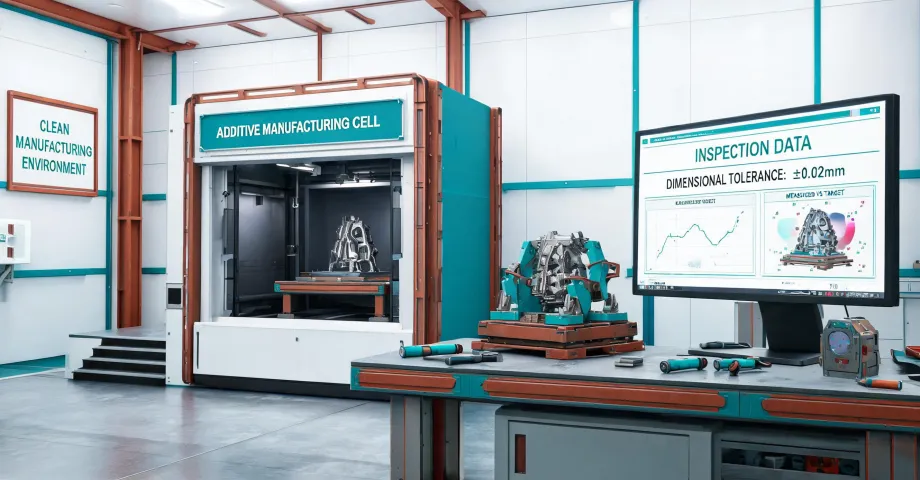
This one confuses a lot of buyers right now. Tungsten carbide additive manufacturing (i.e., 3D-printing carbide parts rather than pressing and sintering) is real technology, and Sandvik Coromant has been investing in it. But unless you're buying custom tool geometries for very specific applications, it probably doesn't affect your day-to-day purchasing decisions yet.
Where it matters: complex coolant channel geometries, intricate chipbreaker designs, and small-batch custom tools where traditional pressing doesn't make economic sense. For standard turning, milling, and drilling inserts, you're still buying pressed-and-sintered carbide, and the traditional selection rules apply.
My note to self: when a sales rep pitches "additive manufacturing" on a standard catalogue insert, ask what specific geometry improvement you're getting. If they can't answer that, it's marketing, not engineering.
What rookie mistake should I avoid at all costs?
Assuming "standard" means the same thing to every vendor and every Sandvik Coromant product line.
Happened to me in 2019. I specified "standard" inserts for a client's turning operation without checking the exact ISO designation. Turned out their "standard" was a different grade code than what I assumed. We ran a tool that was technically correct for the material group but wrong for the specific finishing pass. Result: surface finish rejected on 600 parts. $890 in rework, plus a 1-week delay.
The fix is boring but effective: always match the full ISO designation, not just a description. "CNMG 120408" means nothing without the grade (e.g., 4325, 4315) and chipbreaker. The Sandvik Coromant catalogue is your friend here — they publish detailed grade and application compatibility tables. Use them, even when you're in a hurry.
Also — and this one still stings — I once ordered 500 inserts with the wrong corner radius because I "remembered" the spec instead of checking it. $450 wasted and a credibility hit with the client. Now I have a hard rule: no order without a written spec sheet. No exceptions, not even for "obvious" repeat orders.
How do I actually calculate whether a cheaper tool is costing me more?
Do the math on cost-per-part, not cost-per-insert. Here's the framework I use:
- Tool cost per edge: unit price ÷ number of usable edges
- Cycle time cost: if tool A cuts 20% faster than tool B, that's real money in machine hours (our shop rate is $85/hour)
- Unplanned downtime cost: if a cheaper tool fails unpredictably once a week, that's lost production that never shows up on the invoice
- Scrap and rework cost: how many parts get destroyed when a tool wears out of spec early?
That $200 savings on a cheap insert batch turned into a $1,500 problem when two tools failed mid-cycle on a rush job. We missed a delivery window, paid overtime to recover, and I spent a Saturday on damage control. Bottom line: the invoice price is the beginning of the cost conversation, not the end.
What about buying Sandvik Coromant products direct vs. through a distributor?
From experience: use a distributor for standard catalogue items and recurring orders. Their stock availability and local support are worth the small margin. Go direct or through a specialist for custom tooling, complex applications, or anything requiring engineering support.
We almost went fully direct in 2022 to shave 3-5% off our tooling costs. But when I calculated the transaction cost — our time managing orders, freight consolidation, inventory carrying cost — the "savings" disappeared. The distributor was adding value, not just markup.
Here's what I'd say: don't compare distributor price vs. direct price in isolation. Compare total transaction cost. Sometimes the middleman earns their keep.
What's the single most valuable change to your purchasing process?
Build a written specification checklist and never override it. Ours has 12 items — grade, chipbreaker, ISO designation, corner radius, coating, quantity, tolerances, delivery date, distributor verification, total cost calculation, and two "have you double-checked this?" triggers. We've caught 47 potential errors using it since 2018.
The lowest price on a purchase order is a vanity metric. Cost-per-part, cycle time, and reliability are what actually show up in your production data. That $200 savings turned into a $1,500 problem when two insert batches failed mid-cycle. I learned that by making every mistake in this article. You don't have to. Take it from someone who's already paid that tuition.